Floating through Time
Outdoor Heritage Centre
Visit our website here

Monday, 31 December 2012

Marking the Occasion

We had a lot of visitors to the Boyne Valley in 2012. People from all over the place. Most of them will be celebrating the passing of the old Year and the coming of the new one. It is the nearest thing we have to a global holiday, apart from Paddys Day. So we decided to see what all these peoples would be up to.

In Latin America they wear lucky underwear. They do the same in Italy. In Spain, they eat twelve grapes at midnight and make a wish on each one. Fireworks are common in most countries but in Ecuador they burn scarecrows outside the houses. Scotland has the tradition of first-footing, which involves visiting houses and bringing items of luck with you. They also twirl giant balls of fire around their heads while parading around the streets. This sounds very Viking-like, and fun, but not as fun as Denmark. Denmark is one of the most progressive countries in Europe, but on New Years Eve they like to smash plates on their neighbours front doors. It is a sign of great pride and community standing if you have the biggest pile of broken dishes outside your door in Denmark. In Austria, they waltz to the Blue Danube. In America they watch a Waterford crystal ball descend into Times Square. In Germany, everyone has been watching the exact same tv show every year since 1972. In London, everyone jumps in the fountain in Piccadilly Circus. Another Latin American tradition in the big cities is to race around the block carrying luggage with you. This will apparently ensure lots of travel in the coming year.In Brazil on New Year’s Eve the priestesses of the local macumba voodoo cult dress in blue skirts and white blouses for a ceremony dedicated to the goddess of water, Yemanja. A sacrificial boat laden with flowers, candles and jewelery is pushed out to sea from the famous Ipenama beach in Rio de Janeiro.

Here in Ireland we are big on weird traditions to mark the calendar. Some people have to clean their houses to drive out the spirit of the old year. Others prefer to bang fresh bread on the walls, but if the Mammy caught us doing that she wouldn't be impressed, not after she cleaning the place. There was also something about entering through the front door and leaving through the back door but the Da would be shouting at us to shut the doors. There is still a tradition in rural areas of throwing holy water on the animals in the farmyard. There are also plenty of traditions about food. Some families leave an extra place at the table for those no longer with us. Others eat a plate of pickled herring.

The weirdest tradition in Ireland has to be in the village of portmagee in Kerry. In 17-something, a French ship landed down there and the sailors enacted a strange drama whereby they paraded through the village with an old gentleman and then they killed him so that he would be replaced by a young man. The locals had never seen anything like this before and since then they have been reenacting the same drama every year since.

In cold countries they have Polar Bear Dips, which involves jumping into the sea. This is what we will be doing in the morning. So, whatever you get up to, enjoy.

Credits

http://en.wikipedia.org/wiki/Polar_bear_plunge

http://www.irishcentral.com/roots/Irish-New-Year-traditions-that-span-the-centuries-112594784.html

http://communities.washingtontimes.com/neighborhood/world-our-backyard/2012/dec/31/11-unusual-new-years-eve-traditions-around-world/

Monday, 10 December 2012

Boggers

Living in the Boyne Valley, there is a tendency to spend a lot of time thinking about the neolithic, and giant rocks, and solstice alignments and important world heritage stuff like that.

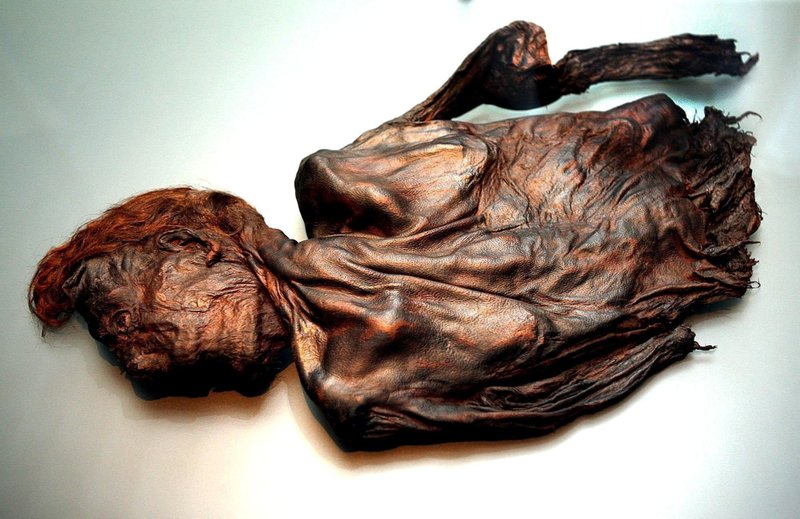
So, when Bord na Mona turf-cutters came across a body in the bog near Kinnegad last Friday, I was delighted. Proper archaeology! Imagine finding something like that after breakfast. The body is now safely deposited in the National Museum where it will be examined further by experts. They should be able to establish the sex, the age and the cause of death of the body. They will probably be able to establish what the person had to eat and other interesting things about the life that it had before it ended up in the bog near Kinnegad.

The evidence is pointing towards the fact that this is a bog body. If it was a modern body, it would usually have synthetic materials such as polyester or jewellery and they would have survived with the body. Prehistoric people did not have access to jeans or tracksuits. Bog bodies are prehistoric burials that are widespread across Northern Europe and which appear to have been deliberately placed in watery conditions. However, the bodies do not decompose as they would normally. The acidic oxygen-free conditions in bogs are perfect for preserving human remains. The skin, hair and even stomach remains can be preserved, although bones tend to turn to goo after a while. While the dry conditions of the deserts kept the pharoahs intact and the ice of the Alps preserved Otzi the Iceman, in Ireland we have the bogs, and underneath them is a whole world of archaeology just waiting to be found. This bog has already been the site of numerous material remains, mostly trackways, but this is the first bog body found here. It is not the first time the Boyne Valley has been the resting place for a bog body though. Another one was found in 2003 and it too is up in the National Museum. He had a natty mowhawk hairdo which he liked to spike with pine resin. Not just ordinary pine resin, but the resin from a particular pine which only grows along the borders of Spain and France. Fancy.

But first let's talk about the bogs because they are crucial to the story. They are strange places, even to those of us who spend summers there. Raised bogs are a result of sudden and severe climate change. After the Ice Age, melted ice gathered in lakes in the interior of Ireland because of it's saucer shape. Plants and trees lived and died on the edge of these lakes. Then, sometime around the Bronze Age there was a major environmental change in Europe. It got wetter, and Ireland got wetter than most. We know this from environmental records in the bog. The trees started to disappear from the pollen record and the peat (dead trees) starts to pile up.

The question is, was it the importation of bronze which led to the cutting down of the trees? These new blades were perfect for chopping trees. Why the need for chopping down all the lovely trees? Well, the change in climate had already covered the uplands in blanket bog. It was useless for farming now. People needed land. People were under pressure to put food on the table, and across Europe, the old empires were falling. Bronze was also useful for something else - weapons which were specially designed to kill people instead of work. So, the bog bodies may have been connected with all this violence.

This is also the period when we start to see water deposits, in rivers, lakes and bogs. Some cultures deposit their wealth for safe-keeping during times of stress. Some do it to appease the gods. Some even do it to mark different territories between opposing groups. These deposits could be goods, or people.

There was also a change when iron was introduced. It appears that societies got even more violent now that they could make stronger swords and spears. The Iron Age in Ireland was always considered a period of huge displacement. There was very little settlement activity, although the excavations during the boom years are changing that picture. It did seem as if the whole country was on the move. The legends talk of invasions, kings, druids and warriors. This is the period that we find the majority of the bog bodies in Europe. The Roman senator, Tacitus, mentions that the Germanic people had a terribe habit of pinning their social outcasts down into bogs with wooden spikes. There is also the strange pattern with bog bodies being mutilated in some fashion. This happens in a lot of cases and we don't know if it happened before or after death.

So, there is lots of violence, catastrophic climate changes and bodies in the bogs. We also have the trackways. These are the wooden structures which were found near this body in Kinnegad bog. Trackways were another Iron Age feature in Northern Europe. Corlea Trackway in longford is the largest Irish example and it was built in 148 BC. They were wooden roads which led into watery landscapes. Only they did not seem to be designed for everyday transport. Trackways appear to be special constructions, used rarely and for purposes which we do not know. Perhaps they were used for a last journey.

All this, without a passage mound in sight.

Credits

http://www.heritagecouncil.ie/fileadmin/user_upload/INSTAR_Database/Climate_Change_and_Human_Activity_in_Wetlands_of_Ireland_Progress_Report_08.pdf

http://www.bbc.co.uk/history/ancient/british_prehistory/human_sacrifice_01.shtml

Thursday, 29 November 2012

Wood and Water

Last week we were off-river. For a change we were in the middle of a forest beside a lake, so we weren't totally on dry land. The location was Drewstown Woods and we were doing a High Ropes Intructor Course. A lovely spot, and all the Beech and Pine trees got me thinking about woodland and wetland archaeology, which is a bit of a contrast to the rolling green mounds and prehistoric art that you would normally associate with the Boyne Valley.

Hanging around
Something must have been in the air because this week saw the release of some amazing pictures from the Drumclay crannog in Fermanagh which was saved from the bulldozer by archaeologists. This got me thinking of the crannogs in the Boyne Valley. Crannogs get their name from the irish for "tree" and they were usually built by driving large wooden piles into waterlogged areas and then building up the interior with brushwood, peat, stones and soil to create an artificial island. Architecturally, lake dwelling spaces are a worldwide phenomenon and are still in use in some cultures today. There are over 1500 of them listed in Ireland. Two of the best known are located in the Boyne Valley.
Moynagh Lough is located near Nobber on the edge of a former lake by the River Dee. It was excavated during the 80s and evidence was found from prehistoric periods along with early history. However, it was the early medieval period (700-900AD) that produced the most evidence for settlement. A range of high status items such as brooches were found here and they were created from different materials including gold, bronze, jet, amber, glass, horn and iron. Some of these items were found in the waste disposal area of the site so there was obviously plenty of material going spare. The presence of bowl furnaces also suggest that this crannog was used for the mass production of objects and many of these were ecclesiastical in nature. Due to the anaerobic conditions of the site there was also a great many items discovered which would normally not survive in the record, such as leather shoes and wooden utensils. Sites like this tell us a lot about everyday life back then because during that period, pottery was rare in Ireland.
Drewstown Lake
On the other side of the Boyne Valley is another famous crannog. Lagore is located near Dunshaughlin and according to the historical sources, this was the home of the Southern Brega who were a warlike bunch that liked nothing better than persecuting the Norsemen in Dublin and the Northern Brega based at Knowth. The evidence found at Lagore include iron slave collars, drinking containers made from human skulls and more iron than bronze. They also liked to use human bones in the foundations of the island, and these may have been workers that paid the ultimate sacrifice. Industrial activity from Lagore was primarily agricultural with ploughs, spindles and game pieces turning up.
Drinking Horns from Moynagh Lough Crannog
So, in a time when there were no towns in Ireland, we have people organising the building of wooden stilted settlements near water. The evidence suggests that they were located here for particular reasons. They may have been to do with manufacturing, or status, or defence. The ongoing work in Fermanagh will hopefully build on what we have learned in the Boyne Valley.
In the meantime, I have some branches to chop.
Credits
Crannogs
Scott, B G 1978 `Iron 'slave-collars' from Lagore Crannog, Co Meath' Proc Roy Ir Acad C 78, 1978 213-30,
Bradley J. Excavations at Moynagh Lough County Meath, The Journal of the Royal Society of Antiquaries of Ireland Vol. 121, (1991), pp. 5-26


Sunday, 4 November 2012

Thursday, 1 November 2012

Halloween

Halloween, or Samhain (Summers End) in the Boyne Valley was originally celebrated as the end of the old year and like a modern day New Years Eve, it is a bit difficult to decide which is the best party to go to on the night. While the urban areas of the Boyne Valley see the continuation of old rituals such as fires, guising (costumes), divination (apple bobbing) and mischief (teenagers roaming the streets), the rural areas are just as busy.
This is not a new phenomenon. Ireland was a rural landscape up until the 20th century and this time of the year is important for country people. The animals would be brought in from the fields. Slaughtering would take place and feasts would be had to fatten up for the dark cold nights coming. This was the last chance to gather fruits or grains before the frosts killed them and the land descended into darkness. Travelling workers returned to their own families. Fires were lit. And of course, the fairy folk were able to slip through the veil between the worlds without the usual spiritual immigration laws that operated the rest of the year.

Up at Loughcrew, the passage mound at Carnbane L has an unusual standing stone within it which is illuminated by the sunrise at Samhain. Cairn U is also supposed to be aligned with the sunrise. The Mound of the Hostages on Tara is another landscape marker aligned with the Samhain sunrise and like Carnbane L, there was a standing stone at its entrance up until the 19th century.

The Mound of the Hostages dates from the neolithic and there is a lot of archaeological evidence for a ring of fire pits around it. The earliest historical records from here mention the lighting of the fires at Tara to signal the start of the New Year. Everyone waited for the signal from Tara, but the high king at Tara got his signal from the druids at Tlachtga, which goes by the name of the Hill of Ward today. While Tara was seen as the political capital, Tlachtga was seen as the spiritual centre for the druids and it is there where the biggest party was last night.

Flame torches and flourescent lights circled this unusual multi-ditched site while a procession made its way up from the fair green in Athboy. Modern day druids rubbed shoulders with Wiccan practitioners and children in masks and elderly farmers out to mark All Hallows Eve, the christian version. There was even a film crew from Korea and when the ritual pageant of the story of Tlachtga started I kept expecting Halloween "Gangnam" style but it was a classy affair, about Tlachtgas search for knowledge and the idea of sharing that knowledge rather than using it to control others. Nice sentiments, followed by tea and crisps.

This mix of different styles and old tales is typical of Tlachtga. Ongoing remote sensing surveys on the hill are revealing that there is a lot more going on under the ground than we can see. There are only three sites like Tlachtga in Ireland and one of them is the Rath of the Synods in Tara so there definitely seems to be a link with the royal site here. Whatever it was originally used for (nobody even knows if the hill of Ward is actually Tlachtga!), it still draws a crowd on Halloween.

Credits

knowth.com

wikipedia

newgrange.com

ucd

tlachtga

Image credit

facebook

facebook

shadowsandstone.com

Friday, 19 October 2012

The Romans of the Boyne Valley

With the news this week that a roman statue of Hercules was found in the National Museum after being missing for over a hundred years and it turns out that it was originally found in the Boyne river near Navan, the question is raised again about whether or not the Romans ever came to Ireland. Coincidently, the Discovery Programme are hosting an international conference this weekend about the Romans in ireland, so the find is well-timed and should get the archaeologists rubbing their trowels with happiness.


While Roman artifacts are rare enough, they do pop up quite a lot in the Boyne Valley and all along the East Coast. It seems that the peoples of the Mediterranean were quite knowledgeable about this area during the period when Rome was a superpower. The first recorded historical reference to the Boyne was on a map in a museum in Alexandria by the philosopher Ptolemy which dates from around 150AD. This map was very accurate (even though it referred to Boyne as Buvinda) and it would have probably have been drawn by Phoenician traders.

The Roman historian, Tacitus, referred to Ireland as being easily invaded by just one legion, yet unlike the rest of Europe, there is no military or even settlement activity discovered yet.


Plenty of trade though. Apparently, the Romans were fond of our wolfhounds. Pottery dredged from the Boyne and from Collierstown have been traced back to Syria and Turkey and they were most likely used for transporting oil and wine. Artifacts found at Tara suggest that there was a Roman trading post here during the Iron Age. At the entrance to Newgrange were found high status Roman coins that were deliberatley deposited there, raising the suggestion that the mound was an international pilgrimage site for them. There was also a roman brooch found in a holywell at Randalstown which was probably another votive deposit.
Burial-wise, there are some definite Roman examples along the east coast. Cremations in Kilkenny are similar to the romano-british style from around 100AD. In Bettystown in the 70s, some very strange burials were found. They were treated differently than others in the area and with the progress in geochemistry in recent years we can tell lots more about these bodies now. Isotope analysis of their tooth enamel places this person as growing up in a very specific part of North Africa around 500AD. You have to remember that the empire was made up of a melting-pot of different ethnic groups at the time. Citizens included visitors from across the Irish Sea and they would have been quite different than the toga wearing beaurocrats we normally think about when we talk about Rome. Patrick was one of those citizens and despite the lack of traditional Roman archaeology found here, christianity was a direct import from Rome to Ireland. So the question is not what the romans have ever done for us, it is more what were they doing here while they were here.

Sources

http://de.wikipedia.org/wiki/Datei:Ptolemy_Cosmographia_1467_-_Ireland.jpg

http://www.irishtimes.com/newspaper/features/2012/1017/1224325323956.html

http://irisharchaeology.ie/2011/11/roman-contacts-with-ireland/

Raftery, B. 1994 Pagan Celtic Ireland: the enigma of the Irish Iron Age. Dublin.

Waddle, J. 1998 The Prehistoric Archaeology of Ireland, Wordwell, Dublin.

Sunday, 7 October 2012

Best thing since before sliced bread...

This week saw the sad closing of one of the Boyne Valleys oldest food processing companies, Spicers Bakery. Navan is where the Blackwater and the Boyne meet and this mix of rushing water has been used for centuries to power different industries, and perhaps the most important of these were the water-mills. The first water-mill in Ireland was supposedly built by King Cormac Mac Art in the Boyne Valley in the 2nd century AD. His favourite concubine was in the bad books with his jealous wife and she was ordered to grind the grain for the whole royal site of Tara. This is why Cormac had the mill built. These were revolutionary machines when you think that rural people still used the more ancient stone quern method of grinding grain into flour right up until the early 20th century. Mills were referred to by historians as "the backbone of Irish industry". Although the present Spicers bakery  was originally the cornstore for the mill, it is still an impressive building. It is a detached six bay four story construction with exposed rubble walls that are whitewashed and which dates from the 1860s.


The mill itself was converted to apartments during the last boom era and it is ironic that it was built in a previous boom. At the time (1785) it was one of the biggest mills in Ireland and it required a considerable amount of capital investment to build these. Records show that there were ten pairs of stones in the original mill, six for wheat and four for oats. The video below shows a typical working water powered flour mill from the Blackwater area.


This large investment was low-risk because bread was fast becoming the staple diet for the new urban workers during the industrial revolution. Before that, bread had been a luxury. The Napoleonic Wars also meant that Britain was dependent on Ireland for its bread. This was why the Irish parliament offered 3d per mile to transport flour to Dublin. This was over twice the price for wheat. Meath was the first county to start sending flour to the capital and this helped its transport infrastructure grow. The Boyne Navigation Canal is a good example of this and it was owned by Spicers until the 1960s. Milling was a profitable business during the 19th century, with over 2500 recorded as being built between 1835 and 1850 in Ireland. There was a downside to this though. Millers wanted all local grinding to be carried out in their mills. That is why we find so many smashed stone querns reused in stone walls and dumped for archaeologists to find. The milling industry also demanded economic protection from the cheap imports which were being processed in the giant mills of Chicago and the American West. This they got, courtesy of the Corn Laws, and they made a killing from it. Unfortunately, the corn laws were not such a good idea during the famine. Eventually, cheap white bread began to flood the market in the 1880s and this heralded the death knell of the mills.
Spicers changed from a mill to a bakery in 1880 and they had depots in Trim and Balbriggan aswell. During the 1970s they employed over 300 people and generations of Loreto convent girls who went to school across the road from the bakery have never forgotten memories of the smell of fresh bread while they studied.