Floating through Time
Outdoor Heritage Centre
Visit our website here

Sunday, 21 April 2013

Big Rock

While the lads were busy with a river trip yesterday, I got out of the Boyne Valley and headed south to the Barrow River and its flat lowlands for a change of scenery. About 6000 years ago, people in this area constructed one of the largest megalithic monuments of its type in Europe and I wanted to check it out. The Brownshill Portal Tomb, or the Kernanstown Cromlech as it is known locally, is situated 3km outside Carlow town on the face of a slight rise. From the road, it looks disappointing. No matter which way you approach this monument, it does not look like much, until you get close to it.


Even when close to it, it is hard to appreciate the scale of this site. Only when I put a person in the picture could I get an idea of how big that capstone really was. It is a big rock! They reckon that it weighs between 100 -150 tonnes. It sits on two upright stones which would have acted as an entrance (the portal) and as such they are similar to court-tombs in that respect. This site also has a blocking stone between the door and this too is common enough in portal tombs. It would also have probably had side stones aswell and it looks like they would have collapsed over time. The capstone, like others, balances on low stones at the back and it ascends upwards to sit on the front uprights. How they managed to put them there is a good question. Monuments like this appear to have been built earlier than passage tombs and again, there is evidence of burial activity, but there is no way of knowing how long the stones were there before the burial took place. Like passage tombs, these monuments were originally covered by a cairn so all you would have seen was the entrance and the mound.
We have no idea why portal tombs follow this fashion. They come in a range of shapes and sizes. They can be spectacular like this one. They can be small and dumpy or tall and skinny. Some look just like a pile of rocks. Some have double capstones balanced on top. Others appear to be like modern sculptures, almost animal-like. Most sites have definitely been used and reused for burials over time, from at least the Neolithic times. Not all of them have burial evidence though, so there is the possibility that they were territorial markers. Some of them also have an alignment with the sun. This particular monument has never been excavated so its mystery remains, but if its size was anything to go by, it marks something or someone important.


Like most prehistoric monuments in Ireland, there is a lot of folklore associated with them. In historical times they were known as the Beds of Diarmuid and Grainne. Some of them have fortune-telling customs connected to them while others were used as dance spots. While these enigmatic monuments attract visitors from all over the world, Ireland is not the only country to have them. They appear in mainland Europe at the same time, along with Russia and India.
However, if you really want to go somewhere with a lot of these monuments, skip Carlow and head to Korea. There you will find the greatest concentration of them in the world.


Monday, 18 March 2013

St Patrick in the Boyne Valley

We have been mad busy with our rope courses and getting ready for the new season, so it has been a while since we paid attention to the archaeology of the Boyne Valley. With the weekend that it is, we did a little digging. Turns out he was so frequent a visitor here back in the 5th century that we would have done him a deal for a few trips on the river.


There are so many legends about Patrick that many people can be forgiven for thinking he was a mythological character, but he was as real as the next person. His own writings survive still and they are the earliest records of a slave in the time of the Roman empire. If that is not impressive enough he is also the first person in history that we know actually existed in Ireland. Yet, he wasn't Irish. He started off as a slave in the west, but he pointed his boat in the direction of the Boyne Valley when he made the return visit. Dublin at this time was only a twinkling in the eye of some distant Vikings, so he headed for Colpe at the mouth of the Boyne. The Boyne allowed Patrick to progress into the heart of the land and also to make his mark on a few of the main power centres in the country. Tara, as a royal site, was top of his list. Although there is no definite record of him ever actually being on the hill, there are plenty of stories about Tara coming to him. Apparently, the druids were expecting this crazy new preacher and they feared that their time as the spiritual teachers of the people was coming to an end. When Patrick lit the Easter fire on a hilltop in the Boyne Valley (probably Knowth or Slane) to herald the birth of the new god, this was in direct opposition to the political custom of the time and he knew that it would be like a slap in the face to Tara. An almighty row started with druids directing thunderbolts and all sorts of weird magic at him. This was no bother to Patrick and he eventually wiped out everyone who refused to kneel before him. It was like a Jedi Knight taking on a load of Sith Lords and kicking ass. This was also where he first used the shamrock to demonstrate the trinity. At least that is the way his 7th century biographer-monk described it. This is the problem with Patricks' story. He had the early medieval equivalent of a facebook page bigging up every move that he made. The truth was probably a bit more mundane.


Patrick was a practical man. The Roman church had already sent a bishop to Ireland to tend to the scattered Christians but Palladius had not left much of a mark apart from a few references in ecclesiastical records. Early medieval society was extremely hierarchical and segmented and Patrick needed to get his foot in the door of the Tuath tribal system because they controlled the people. He needed the protection and influence of the Tuath kings and the Boyne Valley was a hotspot for them. If he could convert the kings, the rest would follow suit. It was trickle-down religion, although he also made a point of converting slaves and low born. He sent his nephew Lomman upriver to convert Fedelmid, the king at the crossing point there. This community became the town of Trim. The Cathedral Church of St Patrick there stands on the site of the early church which rivals Armagh as the oldest Patrician church in Ireland. This focus on creating communities was influenced by his time spent in the new monasteries in France and this is seen as the start of the so-called proto-towns in Ireland.

Patrick was not expected to have much success and in his lifetime he did not view himself as being successful. Ireland was considered at best, the edge of the known world, and at worst, the entrance to hell (Lough Derg in Donegal). His family and friends were not impressed with his mission. There were plenty of easier gigs for a churchman at the time. Todays' equivalent would be to volunteer to go to Mars. He spent most of his time trying to stop his newly christianised people from being killed by raiders and it pained him that Briton traders did the most damage because they did not view Patricks' converts as being worthy. He was successful because he knew the language and he incorporated the pagan religion into Christianity. He would have been well aware that the people worshipped the Boyne as a living god so he used the river for baptism because it  involved full immersion back then. He also used the natural springs and wells in the valley and they would have had spiritual associations from pre-Christian times. There are numerous St Patricks' Wells in the Boyne Valley and they all claim a connection from his travels throughout the county.
The communities did flourish, although not quite as rapidly as his social media marketeers would lead you to believe. We know from the archaeology of burials throughout the Boyne Valley that Christianity was a gradual process. Still, within the space of two generations, Ireland was sending monks back out into Europe who transformed the religion. Over 1500 years later his name is trending worldwide every March 17. Not bad for a visitor.


References
Meath

Irelandnow

Pilgrimagemedievalireland

Voxhiberionacum

Askaboutireland

Image Credits
http://ansionnachfionn.com/2012/06/25/irish-national-heritage-park-no-irish/
http://sothl.com/

Monday, 31 December 2012

Marking the Occasion

We had a lot of visitors to the Boyne Valley in 2012. People from all over the place. Most of them will be celebrating the passing of the old Year and the coming of the new one. It is the nearest thing we have to a global holiday, apart from Paddys Day. So we decided to see what all these peoples would be up to.

In Latin America they wear lucky underwear. They do the same in Italy. In Spain, they eat twelve grapes at midnight and make a wish on each one. Fireworks are common in most countries but in Ecuador they burn scarecrows outside the houses. Scotland has the tradition of first-footing, which involves visiting houses and bringing items of luck with you. They also twirl giant balls of fire around their heads while parading around the streets. This sounds very Viking-like, and fun, but not as fun as Denmark. Denmark is one of the most progressive countries in Europe, but on New Years Eve they like to smash plates on their neighbours front doors. It is a sign of great pride and community standing if you have the biggest pile of broken dishes outside your door in Denmark. In Austria, they waltz to the Blue Danube. In America they watch a Waterford crystal ball descend into Times Square. In Germany, everyone has been watching the exact same tv show every year since 1972. In London, everyone jumps in the fountain in Piccadilly Circus. Another Latin American tradition in the big cities is to race around the block carrying luggage with you. This will apparently ensure lots of travel in the coming year.In Brazil on New Year’s Eve the priestesses of the local macumba voodoo cult dress in blue skirts and white blouses for a ceremony dedicated to the goddess of water, Yemanja. A sacrificial boat laden with flowers, candles and jewelery is pushed out to sea from the famous Ipenama beach in Rio de Janeiro.

Here in Ireland we are big on weird traditions to mark the calendar. Some people have to clean their houses to drive out the spirit of the old year. Others prefer to bang fresh bread on the walls, but if the Mammy caught us doing that she wouldn't be impressed, not after she cleaning the place. There was also something about entering through the front door and leaving through the back door but the Da would be shouting at us to shut the doors. There is still a tradition in rural areas of throwing holy water on the animals in the farmyard. There are also plenty of traditions about food. Some families leave an extra place at the table for those no longer with us. Others eat a plate of pickled herring.

The weirdest tradition in Ireland has to be in the village of portmagee in Kerry. In 17-something, a French ship landed down there and the sailors enacted a strange drama whereby they paraded through the village with an old gentleman and then they killed him so that he would be replaced by a young man. The locals had never seen anything like this before and since then they have been reenacting the same drama every year since.

In cold countries they have Polar Bear Dips, which involves jumping into the sea. This is what we will be doing in the morning. So, whatever you get up to, enjoy.

Credits

http://en.wikipedia.org/wiki/Polar_bear_plunge

http://www.irishcentral.com/roots/Irish-New-Year-traditions-that-span-the-centuries-112594784.html

http://communities.washingtontimes.com/neighborhood/world-our-backyard/2012/dec/31/11-unusual-new-years-eve-traditions-around-world/

Monday, 10 December 2012

Boggers

Living in the Boyne Valley, there is a tendency to spend a lot of time thinking about the neolithic, and giant rocks, and solstice alignments and important world heritage stuff like that.

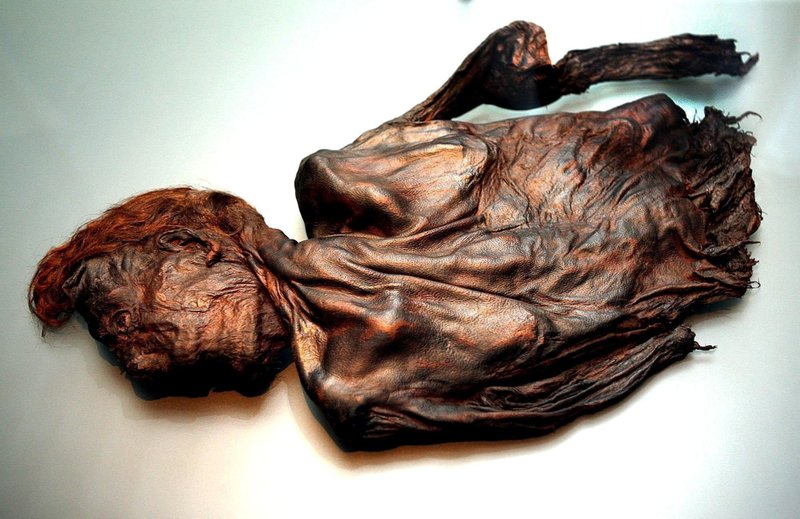
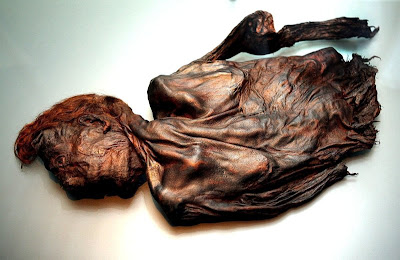
So, when Bord na Mona turf-cutters came across a body in the bog near Kinnegad last Friday, I was delighted. Proper archaeology! Imagine finding something like that after breakfast. The body is now safely deposited in the National Museum where it will be examined further by experts. They should be able to establish the sex, the age and the cause of death of the body. They will probably be able to establish what the person had to eat and other interesting things about the life that it had before it ended up in the bog near Kinnegad.

The evidence is pointing towards the fact that this is a bog body. If it was a modern body, it would usually have synthetic materials such as polyester or jewellery and they would have survived with the body. Prehistoric people did not have access to jeans or tracksuits. Bog bodies are prehistoric burials that are widespread across Northern Europe and which appear to have been deliberately placed in watery conditions. However, the bodies do not decompose as they would normally. The acidic oxygen-free conditions in bogs are perfect for preserving human remains. The skin, hair and even stomach remains can be preserved, although bones tend to turn to goo after a while. While the dry conditions of the deserts kept the pharoahs intact and the ice of the Alps preserved Otzi the Iceman, in Ireland we have the bogs, and underneath them is a whole world of archaeology just waiting to be found. This bog has already been the site of numerous material remains, mostly trackways, but this is the first bog body found here. It is not the first time the Boyne Valley has been the resting place for a bog body though. Another one was found in 2003 and it too is up in the National Museum. He had a natty mowhawk hairdo which he liked to spike with pine resin. Not just ordinary pine resin, but the resin from a particular pine which only grows along the borders of Spain and France. Fancy.
But first let's talk about the bogs because they are crucial to the story. They are strange places, even to those of us who spend summers there. Raised bogs are a result of sudden and severe climate change. After the Ice Age, melted ice gathered in lakes in the interior of Ireland because of it's saucer shape. Plants and trees lived and died on the edge of these lakes. Then, sometime around the Bronze Age there was a major environmental change in Europe. It got wetter, and Ireland got wetter than most. We know this from environmental records in the bog. The trees started to disappear from the pollen record and the peat (dead trees) starts to pile up.

The question is, was it the importation of bronze which led to the cutting down of the trees? These new blades were perfect for chopping trees. Why the need for chopping down all the lovely trees? Well, the change in climate had already covered the uplands in blanket bog. It was useless for farming now. People needed land. People were under pressure to put food on the table, and across Europe, the old empires were falling. Bronze was also useful for something else - weapons which were specially designed to kill people instead of work. So, the bog bodies may have been connected with all this violence.

This is also the period when we start to see water deposits, in rivers, lakes and bogs. Some cultures deposit their wealth for safe-keeping during times of stress. Some do it to appease the gods. Some even do it to mark different territories between opposing groups. These deposits could be goods, or people.

There was also a change when iron was introduced. It appears that societies got even more violent now that they could make stronger swords and spears. The Iron Age in Ireland was always considered a period of huge displacement. There was very little settlement activity, although the excavations during the boom years are changing that picture. It did seem as if the whole country was on the move. The legends talk of invasions, kings, druids and warriors. This is the period that we find the majority of the bog bodies in Europe. The Roman senator, Tacitus, mentions that the Germanic people had a terribe habit of pinning their social outcasts down into bogs with wooden spikes. There is also the strange pattern with bog bodies being mutilated in some fashion. This happens in a lot of cases and we don't know if it happened before or after death.

So, there is lots of violence, catastrophic climate changes and bodies in the bogs. We also have the trackways. These are the wooden structures which were found near this body in Kinnegad bog. Trackways were another Iron Age feature in Northern Europe. Corlea Trackway in longford is the largest Irish example and it was built in 148 BC. They were wooden roads which led into watery landscapes. Only they did not seem to be designed for everyday transport. Trackways appear to be special constructions, used rarely and for purposes which we do not know. Perhaps they were used for a last journey.

All this, without a passage mound in sight.

Credits

http://www.heritagecouncil.ie/fileadmin/user_upload/INSTAR_Database/Climate_Change_and_Human_Activity_in_Wetlands_of_Ireland_Progress_Report_08.pdf

http://www.bbc.co.uk/history/ancient/british_prehistory/human_sacrifice_01.shtml

Thursday, 29 November 2012

Wood and Water

Last week we were off-river. For a change we were in the middle of a forest beside a lake, so we weren't totally on dry land. The location was Drewstown Woods and we were doing a High Ropes Intructor Course. A lovely spot, and all the Beech and Pine trees got me thinking about woodland and wetland archaeology, which is a bit of a contrast to the rolling green mounds and prehistoric art that you would normally associate with the Boyne Valley.

Hanging around
Something must have been in the air because this week saw the release of some amazing pictures from the Drumclay crannog in Fermanagh which was saved from the bulldozer by archaeologists. This got me thinking of the crannogs in the Boyne Valley. Crannogs get their name from the irish for "tree" and they were usually built by driving large wooden piles into waterlogged areas and then building up the interior with brushwood, peat, stones and soil to create an artificial island. Architecturally, lake dwelling spaces are a worldwide phenomenon and are still in use in some cultures today. There are over 1500 of them listed in Ireland. Two of the best known are located in the Boyne Valley.
Moynagh Lough is located near Nobber on the edge of a former lake by the River Dee. It was excavated during the 80s and evidence was found from prehistoric periods along with early history. However, it was the early medieval period (700-900AD) that produced the most evidence for settlement. A range of high status items such as brooches were found here and they were created from different materials including gold, bronze, jet, amber, glass, horn and iron. Some of these items were found in the waste disposal area of the site so there was obviously plenty of material going spare. The presence of bowl furnaces also suggest that this crannog was used for the mass production of objects and many of these were ecclesiastical in nature. Due to the anaerobic conditions of the site there was also a great many items discovered which would normally not survive in the record, such as leather shoes and wooden utensils. Sites like this tell us a lot about everyday life back then because during that period, pottery was rare in Ireland.
Drewstown Lake
On the other side of the Boyne Valley is another famous crannog. Lagore is located near Dunshaughlin and according to the historical sources, this was the home of the Southern Brega who were a warlike bunch that liked nothing better than persecuting the Norsemen in Dublin and the Northern Brega based at Knowth. The evidence found at Lagore include iron slave collars, drinking containers made from human skulls and more iron than bronze. They also liked to use human bones in the foundations of the island, and these may have been workers that paid the ultimate sacrifice. Industrial activity from Lagore was primarily agricultural with ploughs, spindles and game pieces turning up.
Drinking Horns from Moynagh Lough Crannog
So, in a time when there were no towns in Ireland, we have people organising the building of wooden stilted settlements near water. The evidence suggests that they were located here for particular reasons. They may have been to do with manufacturing, or status, or defence. The ongoing work in Fermanagh will hopefully build on what we have learned in the Boyne Valley.
In the meantime, I have some branches to chop.
Credits
Crannogs
Scott, B G 1978 `Iron 'slave-collars' from Lagore Crannog, Co Meath' Proc Roy Ir Acad C 78, 1978 213-30,
Bradley J. Excavations at Moynagh Lough County Meath, The Journal of the Royal Society of Antiquaries of Ireland Vol. 121, (1991), pp. 5-26


Sunday, 4 November 2012

Thursday, 1 November 2012

Halloween

Halloween, or Samhain (Summers End) in the Boyne Valley was originally celebrated as the end of the old year and like a modern day New Years Eve, it is a bit difficult to decide which is the best party to go to on the night. While the urban areas of the Boyne Valley see the continuation of old rituals such as fires, guising (costumes), divination (apple bobbing) and mischief (teenagers roaming the streets), the rural areas are just as busy.
This is not a new phenomenon. Ireland was a rural landscape up until the 20th century and this time of the year is important for country people. The animals would be brought in from the fields. Slaughtering would take place and feasts would be had to fatten up for the dark cold nights coming. This was the last chance to gather fruits or grains before the frosts killed them and the land descended into darkness. Travelling workers returned to their own families. Fires were lit. And of course, the fairy folk were able to slip through the veil between the worlds without the usual spiritual immigration laws that operated the rest of the year.

Up at Loughcrew, the passage mound at Carnbane L has an unusual standing stone within it which is illuminated by the sunrise at Samhain. Cairn U is also supposed to be aligned with the sunrise. The Mound of the Hostages on Tara is another landscape marker aligned with the Samhain sunrise and like Carnbane L, there was a standing stone at its entrance up until the 19th century.

The Mound of the Hostages dates from the neolithic and there is a lot of archaeological evidence for a ring of fire pits around it. The earliest historical records from here mention the lighting of the fires at Tara to signal the start of the New Year. Everyone waited for the signal from Tara, but the high king at Tara got his signal from the druids at Tlachtga, which goes by the name of the Hill of Ward today. While Tara was seen as the political capital, Tlachtga was seen as the spiritual centre for the druids and it is there where the biggest party was last night.

Flame torches and flourescent lights circled this unusual multi-ditched site while a procession made its way up from the fair green in Athboy. Modern day druids rubbed shoulders with Wiccan practitioners and children in masks and elderly farmers out to mark All Hallows Eve, the christian version. There was even a film crew from Korea and when the ritual pageant of the story of Tlachtga started I kept expecting Halloween "Gangnam" style but it was a classy affair, about Tlachtgas search for knowledge and the idea of sharing that knowledge rather than using it to control others. Nice sentiments, followed by tea and crisps.

This mix of different styles and old tales is typical of Tlachtga. Ongoing remote sensing surveys on the hill are revealing that there is a lot more going on under the ground than we can see. There are only three sites like Tlachtga in Ireland and one of them is the Rath of the Synods in Tara so there definitely seems to be a link with the royal site here. Whatever it was originally used for (nobody even knows if the hill of Ward is actually Tlachtga!), it still draws a crowd on Halloween.

Credits

knowth.com

wikipedia

newgrange.com

ucd

tlachtga

Image credit

facebook

facebook

shadowsandstone.com